Archive for the ‘3D’ Category

Sony + IMAX = match made in heaven

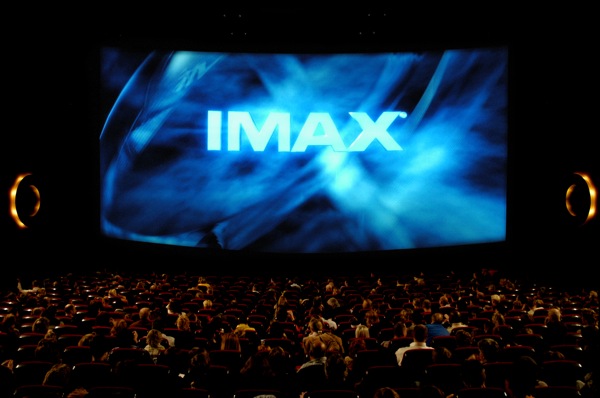
(Reuters) – Shares of Imax Corp went for a roller-coaster ride on the last day of 2010, climbing steeply on a report Sony Corp or Walt Disney might be interested, but plunging after Imax poured cold water on the speculation.

Britain’s Daily Mail, without citing sources, reported late on Thursday that Sony may be readying a bid for the big-screen movie company at more than $40 per share. The newspaper also named Disney as a possible suitor, citing “industry sources”.

Imax shares jumped as much as 20 percent early on Friday but shed most of those gains after Imax said in a release it was “unaware of any corporate developments” that would account for the rise.

A deal for all outstanding Imax shares at $40 each — a 58 percent premium on Monday’s close — would value the company at more than $2.5 billion.

Traders and analysts put the takeover talk into the speculative basket, suggesting the price mentioned was too high and the year-end timing suspicious.

“I’m not going to bother wasting my time on that,” said one trader. “Too many whispers in the world.”

Investors, while trading in record volumes of Imax stock, also seemed to shrug off at least the suggested price, with the shares jumping to $32.30 early in the Nasdaq session before falling back to $28.06 by 3:55 p.m. Eastern, still a 4.5 percent gain on Thursday’s close.

Some 25 million of Imax’s Nasdaq-listed shares had changed hands by that time, compared with a daily average of around 1.5 million over the past 12 months.

Imax’s shares were 4.1 percent higher at C$27.97 on the Toronto Stock Exchange.

Sony and Disney did not respond to requests for comment on the media report.

An Imax spokesman said: “The first Imax became aware of these rumors was through yesterday’s Daily Mail article. It has been the company’s long-standing policy not to comment on such rumors.”

Any studio takeover of Imax would hamper its growth, according to Eric Wold at Merriman Capital, as other studios would be less willing to show their films on the oversized screens and, in turn, theaters would be less inclined to install more screens.

Imax, which had put itself up for sale in the past, posted a third-quarter profit that blew past analyst expectations, and forecast rapid expansion of its theater network, especially in emerging markets such as China.

The company made a net profit of $19.2 million in 2009 after two years of losses.

Imax shares have risen tenfold in the past two years, as the company capitalized on the popularity of 3D movies such as “Avatar” and “Toy Story 3,” weathering the downturn felt by other theater chains.

Apple presses towards 3D handhelds

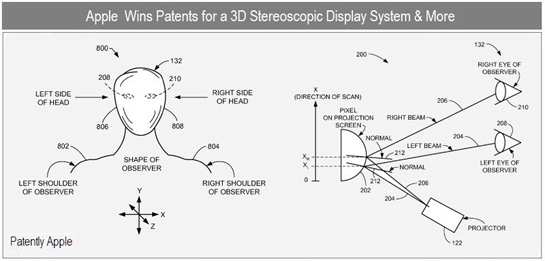
Apple has been awarded a patent for a 3D stereoscopic display system fuelling rumour that it is considering adding 3D screen/projection technology to its products, including the iPhone, iPad or Mac computers. Alternatively, the company could be about to enter the 3DTV business – an intriguing prospect. The patent was first applied for back in 2006, but has just been granted, and it is a step in the right direction for Apple to bring about its own form of autostereoscopic (glasses-less) 3D display technology:
Source: HDGURU 3D

End of Year B.O. tallies suggest that 3D is cannibalizing the industry

Nikki Finke reports on the dilemma facing distributors with regards to the new technology and ticket pricing:

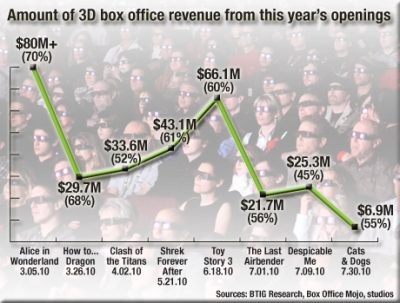
The Top 5 Grossing Movies of 2010 in North America were Toy Story 3 (3D – Disney/Pixar), Alice In Wonderland (3D – Disney), Iron Man 2 (2D – Disney/Marvel distributed by Paramount), The Twilight Saga: Eclipse (2D – Summit Entertainment), and Inception (2D – Warner Bros/Legendary Pictures). Interesting how not all were 3D despite the higher ticket prices, which has prompted one prominent media analyst this week to call on the movie industry to scale back on the number of 3D movies it has planned because demand for them is lessening and 3D is “not the panacea which Hollywood studios hoped it would be”, says Rich Greenfield.

He notes that total movie industry box office is down over $152M or 30% year-over-year. And 4th quarter-to-date, box office is now down over 8% and could easily end the quarter down 9% given how poorly newly opened films are performing. In turn, attendance for Q4 2010 will likely be down around 12% – “a staggering number for an industry that expected 3D technology to motivate people to get out of their houses and go to the movies,” he says. ”The U.S. consumer is becoming increasingly less interested in 3D movies. While the horror and gross-out comedy genres may benefit from 3D (think Saw 3D or Jackass 3D), the vast majority of 3D movies this year have been disappointing at best (the exceptions being Alice in WonderlandToy Story 3, and Despicable Me).”

Greenfield calls this “A Recipe for Disaster: Hollywood is combining substantial price increases ($3.25 3D upcharge is the average in the US on a $7.00-$7.25 average 2D ticket), with annoying glasses that substantially dim the light of a movie and which young children spend more time playing with than wearing, with sub-par content (not to mention the fact that 3D gives some people headaches and others cannot see 3D imagery at all). While you may think of us as the ‘3D Grinch’, we fundamentally believe content and story are the key factors to success and that technology alone is not a long-term path to success or profits. The movie industry should reduce the number of 3D movies it has planned or at least substantially scale back the upcharge as they are simply charging way too much for poor content. Did a Jack Black comedy, Gulliver’s Travels really need to be in 3D? We suspect even if the movie was bad, lowering pricing (to 2D levels) would have ended up selling more tickets.”

Although others’ projections for 2011 and 2012 box office are upbeat, Greenfield maintains that weak box office is likely to accelerate studio plans for early release premium Video-On-Demand. “While the exhibitors continue to focus on the risks to cutting into their 4-month release window, we suspect the weakness in exhibition attendance trends is likely to provoke Hollywood to accelerate their plans to release movies earlier in the home. Studios need to find new revenue streams to bolster movie profits in 2011 and beyond. We continue to expect multiple studios to begin trialing early-release, premium-priced VOD by late Q1 2011/early Q2 2011.”

3D Lenses make sense when they are paired to match and calibrated

While you might think that the recent explosion of 3-D production throughout the United States, particularly for sports and movies, would be a windfall for manufacturers of broadcast and professional production lenses, the results have been decidedly mixed. It depends upon which vendor you ask.

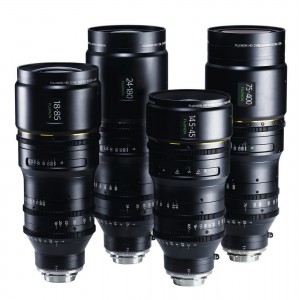
Some productions to date have used existing Canon HD lenses pulled from the shelf and paired up for stereoscopic image capture, but this requires a certain technical skill to get the optical alignment right. Others have employed a new generation of 3-D-compatible lenses (from such companies as Fujinon andThales Angeneiux) to get the job done, but there’s still some technical tweaking to be done.

Perhaps the most important issue for professionals is finding the right combination. Many think you have to find an identical pair of lenses and be sure to use those same two lenses together for every production to ensure perfect alignment and, thus, good (i.e., easy on the eyes) stereoscopic images. However, representatives for both Canon and Fujifilm said there is no such thing as a “perfectly matched” pair of lenses. Using sophisticated manufacturing techniques and careful QC processes, all of their standard 2-D HD lenses are typically designed to be 3-D-ready; however, there are some differences to be aware of.

Adjusting tolerances

Larry Thorpe, renown imaging expert and national marketing executive for the broadcast and communications division at Canon U.S.A., said most portable HD lenses contain approximately two dozen separate lens elements (large box lenses include almost three dozen). The optical design of the lens includes accommodations for adjusting the minute tolerances associated with all of these lens elements and their mountings.

“Although the present state of the art in lens design makes these tolerance differences virtually imperceptible in lenses used in normal 2-D production, the differentials between tolerances of any two lenses can become visible in a 3-D application,” Thorpe said. “Over the past year, based upon many 3-D projects in which we have become involved, our R&D team is presently exploring possibilities of further tightening control of these tolerances.”

Thom Calabro, director of marketing and product development for the Fujinon broadcast and communications products division at Fujifilm, said that his company has already figured out how to tighten these tolerances. While Fujinon clearly designates if a lens is 3-D-capable (including four new B4 mount lenses), it does not sell them as matched pairs. Basically, users can be assured of good results if they use any two Fujinon HD lenses with “T5DD” at the end of the model number.

“After our normal manufacturing process, we perform a final test,” Calabro said. “During this testing, we designate a certain number of these for 3-D. Each lens is carefully rechecked to ensure that the optical axis is of a very tight tolerance. Our 3-D-designated lenses can be mixed and matched, of course, with lenses of the same focal length. This makes it ideal for mobile companies who frequently move lenses between trucks. There is no need to keep track of ‘paired’ lenses.”

While Fujinon T5DD lens customers don’t need to designate a matched pair among their stock, Canon stresses the need to identify camera-lens combinations that work well together, even for 2-D HD acquisition.

Finding the right camera-lens combination

“You’re not just matching lenses; you’re also matching cameras,” Thorpe said, adding that there are two key issues to be dealt with when matching a 2-D HD lens-camera pair for 3-D operation

First, when a lens is mounted to a camera, there is an inevitable mechanical tolerance associated with the lens’ optical center and another separate tolerance associated with the camera’s optical center. These separate tolerances can be additive or subtractive in terms of the final optical axis for a given lens-camera combination because both tolerances entail plus and minus limits. Recognizing this, tolerance limits for both have been carefully established between the optical and the camera manufacturers.

“These (tolerances) are on the order of some tens of microns,” Thorpe said. “The resultant small miscentering of the lens-camera optical axis typically translates into tens of pixels (for a 1920 x 1080 HDTV video format). For a 2-D HD camera, this is of little consequence. For 3-D pairs, however, the differential can be troublesome.”

He said Canon has been training 3-D technical crews on how to take any two lenses, loosen their respective mechanical mounting plates and, by an interactive trial-and-error process while mounted on the two chosen cameras, converge the lens-camera optical centers to the fullest degree possible.

Of course, this process can be time-consuming and tedious, and Fujinon’s Calabro said that it’s not necessary in the case of T5DD lenses.

source: broadcastenginerring.com

Hands on: Sky 3D review

A whole new ball game

To capture its 3D broadcast pictures Sky uses two HD cameras to take left and right-aligned images of a chosen scene. The need for dedicated 3D camera rigs means that viewers watching a live event – such as the Ryder Cup golf tournament, for instance – don’t see the same images as the regular 2D transmission.

This also means separate commentary teams and studio presenters. The images are anamorphically compressed and positioned side by side before being encoded as a normal HD stream. Anyone watching in 2D who tunes in to channel number 217 will see the split screen showing two nearly-identical images. It’s then time to tell your TV it needs to engage its side-by-side 3D mode and the screen will display a single fuzzy image.

For perfect clarity you pop on your 3D specs and assume your viewing position. Sky’s 3D channel may now be fully-fledged, but as a glance at the programming guide shows, there aren’t that many original 3D broadcasts in a given week.

This, though, is deliberate, as Sky admits that 3D viewing is meant for specially planned events and the idea of watching uninterrupted 3D shows and adverts (not that there are any) is simply unimaginable.

The very nature of 3D viewing places you in a cinema-like situation and it’s largely down to the darkened, shuttering specs. Hence: no glancing at each other as you discuss Tiger Woods’ dire tee shot; no getting up to make a brew while keeping an eye on proceedings; and no reading magazines during the ad breaks.

3D programming on Sky

So despite several hours of preview footage and various repeats, the amount of original 3D programming available feels about right.

The first week was dominated by four days of golf, with the rest of the schedule given over to a couple of CGI movies (Monsters vs Aliens and Ice Age: Dawn of the Dinosaurs), some sporting archive footage (World Matchplay Darts, US Open tennis, Super League rugby and the 2010 Champions League final) and some bespoke 3D documentaries about dancing and wildlife.

The first time you watch any genre in 3D is undeniably exciting, although the process of switching from 2D viewing on a Panasonic 3D plasma was convoluted and involved several menu selections plus the need to switch from Normal mode to Dynamic to compensate for the reduction in brightness caused by the tinted 3D glasses.

The reversal of this process also makes it a chore to switch back to 2D and check what’s on another channel. Of all the sports currently on show, golf is perhaps the biggest challenge for 3D producers. While football and tennis lend themselves to some naturally good angles that give a welcome sense of depth, golf offers a lot of images that seem flat because there isn’t enough foreground interest.

3D TV in action

The best shots are those of the players teeing off, or caddies milling around the green, with a packed gantry behind them and the glorious Welsh hills in the background. Even then, the 3D effect is stronger when the sun is shining than when it is gloomy and wet.

And, despite the irritating commentators’ propaganda about how fabulous 3D is, sometimes the darkness and lack of definition make it impossible to see the hole.

But other material fares better. With macro-3D documentary The Bugs!, the curiosity of seeing things stereoscopically had me marvelling at certain scenes, while the documentary entitled Dance, Dance, Dance has some great wide shots of different dance styles, and seems to work better than the animated movies that play havoc with your eyes at times by using outward projecting objects whose disappearance at the edge of frame contravenes spatial logic – although Sky should be applauded for getting a good roster of new 3D movies on its channel.

There’s no doubt that there’s still some way to go before you can sit down in front of Sky 3D and feel completely happy with the experience, but even at this early stage it shows promise.

Source: 3dradar.techradar.com

Epic, Epic, Epic : Peter Jackson buys the new Red camera in bulk for The Hobbit

The train appears to be leaving the station as another “A-List” director, Bryan Singer endorses the new Red Camera system known as Epic:

From: bleedingcool.com

In my youth, Kubrick’s Barry Lyndon was almost an mythical movie, and a big part of the myth revolved around the “special lenses” that Kubrick used to shoot the film. Made by Zeiss from NASA-developed still-camera lenses, they allowed Kubrick and cinematographer John Alcott to shoot a number of scenes in the film that were lit entirely by candlelight.

From what I keep reading about its capabilities, I think Kubrick would have loved the upcoming Red EPIC camera, and here’s one hint as to why.

Bryan Singer has personally stopped by the Red User forums to leave a Christmas Eve message, revealing just a little of what he’s planning for his next picture:

I’m very much looking forward to using the EPIC Red for my next movie Jack the Giant Killer which will be shot in, what else, 3D. The camera’s incredibly compact size and extraordinary resolution are ideal for the 3D format.

But more importantly Jack the Giant Killer is my first movie set in a time before electricity. The EPIC’s extraordinary exposure latitude will allow me to more effectively explore the use of natural light.

“More importantly”? Yeah, I’m sure some people are going to read that as anti-3D sentiment. Either way, I’m reckoning that this is going to be a wonderfully shot movie and to know that Singer is feeling ambitious about the cinematography is nicely encouraging.

Update: 12.17.10

From Jim Jannard and Darius Wolski, A.S.C.

Ridley Scott’s upcoming Science Fiction film, which begins principal photography this spring, will be shot on EPIC.

“In my opinion, the new Red Epic camera is about to revolutionize all spectrums of the film industry.

I am going to use Epics in my new project directed by Ridley Scott. I am amazed with the quality of the image and the fact that you can shoot 5k at 120fps without compromising resolution, and most of all the size of the camera.

Combined with the Element Technica Atom 3d rig, we will be able to shoot a 3d movie with the flexibility of a conventional cinema camera.

I don’t see anything that comes close to it at the moment. I can’t even imagine the potential Epic will have on the big blockbuster industry as well as independent cinema.”

11.28.10 from Jim Jannard, owner and developer of the Red Camera systems:

Peter Jackson’s two film adaptation of The Hobbit will be shot in 3D using RED DIGITAL CINEMA’S soon to be released EPIC Digital Cameras.

The Hobbit will be amongst the first productions in the world to use the EPIC and at least thirty cameras will be required by the 3-D production. The EPIC’S small size and relatively low weight, makes it perfect for 3-D – where two cameras have to be mounted on each 3D rig.

The successor to RED’s industry changing RED ONE, the EPIC has 5K resolution, can shoot up to 120 frames per second and has a new HDRx™™ mode for the highest dynamic range of any digital cinema camera ever made. Taking everything they had learned from building their first camera, RED designed the EPIC from scratch and have produced a smaller, lighter camera that is an order of magnitude more powerful.

Jackson has a long history with RED, dating back to when he directed the short film ‘Crossing the Line’ as a very early test of prototype RED ONE cameras. “I have always liked the look of Red footage.” he says, “I’m not a scientist or mathematician, but the image Red produces has a much more filmic feel than most of the other digital formats. I find the picture quality appealing and attractive, and with the Epic, Jim and his team have gone even further. It is a fantastic tool, the Epic not only has cutting edge technology, incredible resolution and visual quality, but it is also a very practical tool for film makers. Many competing digital systems require the cameras to be tethered to large cumbersome VTR machines. The Epic gives us back the ability to be totally cable free, even when working in stereo.”

Jim Jannard the owner and founder of RED flew to New Zealand earlier this year with members of his team so that Jackson could test the EPIC and assess its suitability. “Everybody at RED is incredibly proud that Peter has chosen the Epic” says Jannard, “The Hobbit is a major production, and could have chosen any camera system that they wanted. The fact that they went with us is extremely gratifying.”

The Hobbit will start shooting in New Zealand early next year.

Jim

Will the Royal Wedding be broadcast in 3D?

Prince William and Kate Middleton intend to make their wedding a people’s event and on April 29 the happy couple may seem close enough for you to reach out and touch them. Broadcasters are considering plans to screen the royal wedding in 3D. If those plans come to fruition it would mean a worldwide audience of millions would watch the anticipated marriage ceremony through 3D glasses.

It is understood that Sky, the BBC and Virgin are in joint discussions about the possibility of screening the event live from Westminster Abbey in 3D.

Sky TV have pioneered the new 3D technology on the small screen, largely for sporting events, but it is more likely that a terrestrial broadcaster such as the BBC will get full access to footage of the event, in order to cater for the largest possible TV audience.

While the technology requires a special television set for home viewing, it is possible that the event could be screened in pubs and cinemas for mass public consumption in 3D.

Jana Bennett, director of BBC Vision, said early meetings had taken place with other broadcasters and she was aware of interest in using 3D technology. She said: ‘We are already planning with the other broadcasters so I know about the 3D thing as well. That is obviously of some interest but our responsibility is to bring things everybody can see on air and 3D has a very limited footprint.’

She added the royal couple were in ‘their own time, their own space and we shouldn’t make assumptions yet about what our coverage should amount to.’

There has been speculation on several technology websites that Sky is considering 3D coverage of the event, but a spokeswoman for the broadcaster said it was ’speculation at this stage’.

Prince William and Kate Middleton, both 28, announced their engagement last week, nine years after they met as students at St Andrews University.
Source: dailymail.co.uk

Cineform teams up with Aja to offer stereo workflow for the Kona 3

CineForm®, Inc., creators of high-fidelity compression-based workflow solutions for the post production marketplace, announced today that it has teamed up with AJA to offer full stereo 3D workflow support for the newly launched KONA 3G card, the multi-format SD/HD/Dual Link/3G/2K video I/O hardware for Mac.

As part of this cooperative effort, AJA released updated version 8.1 KONA software which has added 3D video controls to the KONA 3G’s Control Panel software interface enabling direct ingest into, and playout of, CineForm 3D files, further simplifying production workflows for customers working with 3D content. During ingest, KONA 3G enables simultaneous real-time capture of separate left eye and right eye sources through HD-SDI – including sources previously recorded in stereo mode on HDCAM SR – directly into CineForm 3D files. Each individual eye is multiplexed together into a CineForm 3D file that is available for immediate editing with CineForm’s Neo3D software when used in combination with Apple Final Cut Pro, Adobe Premiere Pro and other compatible software applications. The new KONA software also adds support for recording and playout of CineForm 4:2:2 2D media.

The AJA KONA 3G card featuring support for CineForm Neo3D is available immediately.

“One of our primary goals with the KONA 3G was to deliver a solution that could handle just about anything our customers are dealing with today. Stereo 3D, and our ability to support it, is rising to the top of the list for many customers,” said Nick Rashby, President, AJA. “Through our collaboration with CineForm, our customers who wish to work with stereo 3D in post can eliminate the time consuming step of transcoding material after ingest and instead be ready to edit immediately when using CineForm Neo3D.”

CineForm Neo3D is CineForm’s award-winning 3D post production workflow solution that enables users to edit 3D projects in real time with full frame rate playback to an external 3D monitor. With CineForm First Light 3D as the enabling 3D workflow and production engine, Neo3D users are provided comprehensive control of the 3D image processing workflow.

The new AJA KONA 3G provides professional editors with the utmost in workflow flexibility, supporting a broad range of video formats including: 10-bit uncompressed video 3G/HD/SD SDI I/O, new HDMI 1.4a output for stereoscopic monitoring to consumer 3D displays, 8-channel AES digital audio I/O (16-channel AES with optional K3G-Box) and 16-channel SDI embedded audio I/O, real-time hardware-based up/down/cross conversion to support a range of SD and HD formats, dual-link HD, even 2K formats, a hardware-based downstream keyer and more.

source: www.aja.com

If you are old enough to remember the Viewmaster

Hasbro Inc. is betting that iPod and iPhone users want 3-D viewing on the go.

The nation’s second-largest toy maker is set to unveil to investors on Tuesday a handheld device called My3D that attaches to the two Apple Inc. devices. It promises three-dimensional content that offers a 360-degree experience in gaming, virtual travel experiences and entertainment content. It’s aimed at both children and adults.

The device, which resembles a pair of binoculars with a slot in which users insert their iPod or iPhone, will be priced at $30. It will be available starting next spring at stores where Apple’s iPhones and iPod Touches are available.

Shoppers can then visit Apple’s App store, which will allow shoppers to browse for additional My 3D content. Content varies in price; some apps will be free.

Hasbro said it was guided by Apple during development and believes there’s nothing available that matches the quality and 3-D experience on the iPhone or iPod Touch.

If it catches on, it has big potential. More than 125 million iPod Touches and iPhones have shipped, according to Shaw Wu, senior research analyst at Kaufman Bros. L.P. He predicts that will hit 200 million by end of 2011.

“The issue with this is whether they are going to get enough content for it,” Wu said.

Hasbro is confident it will and says it has teamed up with Dreamworks Animation, whose movie “Megamind” hit theaters last weekend, to develop material.

Separately, Hasbro’s My3D will use content from a 3-D television network from Discovery, Sony and Imax scheduled to make its debut next year. Viewers will be able to see trailers and exclusive behind-the-scenes snippets from films for up to 20 minutes. Hasbro says the device will be a key way to market its own brands in a 3-D experience, though details haven’t been set.

Meanwhile, Hasbro worked with LA Inc., the Los Angeles Convention and Vistors Bureau, to create virtual travel experiences that include visits to the Wax Museum and the Santa Monica Pier.

Through other apps, users can feel like they’re immersed in deep water, exploring coral reefs or playing a shark attacking a tuna, while all along learning facts about sea life. There are also shooter games in a virtual galaxy.

“The idea of being able to be somewhere in Los Angeles, in this 360-degree environment, to be in the shark tank, to be able to swim with the fish and chase after the fish. These are really breakthrough immersive experiences,” said Brian Goldner, president and CEO of Hasbro.

Source: yahoo.com

Werner Herzog’s ‘Cave of Forgotten Dreams’ in 3D

The legendary German auteur Werner Herzog presented his newest film, “Cave of Forgotten Dreams,” in 3D, to kick off the brand new DOC NYC festival. New York’s avant-garde silver fox David Byrne and his pal, Annie Clark (a.k.a. St. Vincent), donned bulky 3D specs along with the assembled crowd of NYU film students and cinephiles in NYU’s Skirball Center to take Herzog’s three-dimensional tour of France’s Chauvet caves.

Discovered in 1994, the caves contain perfectly preserved paintings done during the ice age, over 32,000 years ago -– the earliest known images of mankind. Herzog is one of only a handful of people who have been granted access.

“Cave of Forgotten Dreams” includes the cheeky commentary you expect from Herzog as well as the breathtaking beauty. When at one point in the film a scientist demonstrates Cro-Magnon spear-throwing technology, Herzog remarks, “I think you would not kill a horse throwing that way.” Early in the film, he sets the caves’ striking images of warring bison, mating lions and galloping horses to the sounds of a human heartbeat.

In Herzog’s version of a twist ending, the director imagines that crocodiles have given birth to albino offspring due to the nuclear power plant nearby, then ponders futures crocodiles’ perceptions of Chauvet’s cave paintings. Fans who saw Herzog’s “Bad Lieutenant: Port of Call New Orleans” will note a trend in the director’s new reptile obsession.

In the Q&A that followed the screening, Herzog played the jovial provocateur, commenting that he is wary of labeling himself an artist, as he sees the art world as corrupt and misguided with its brokers and general interest in turning a profit. The statement drew applause.

Defending his use of 3D technology, which some film enthusiasts regards as a gimmick, Herzog declared, “A film like this absolutely must be in 3D.” He noted that while he’s very skeptical of the technology and its trendiness and overuse, it would have been impossible to capture the beauty of the stalagmites, stalactites, calcified bones and paintings of the Chauvet caves in any other format. “You need fireworks like ‘Avatar’,” he conceded. But the studios’ real interest in 3D movies? Herzog says it’s all about the profits. “3D films are impossible to pirate,” he said.

Next up for the prolific director? Herzog will narrate a shortened version of Russian filmmaker Dmitry Vasyukov’s four-hour-long black and white documentary about hunters in Siberia.

source:wsj.com

Return top

About 3D & Digital Cinema

If you are a tech head, cinema-phile, movie geek or digital imaging consultant, then we'd like to hear from you. Join us in our quest to explore all things digital and beyond. Of particular interest is how a product or new technology can be deployed and impacts storytelling. It may be something that effects how we download and enjoy filmed entertainment. It may pertain to how primary and secondary color grading will enhance a certain tale. The most important thing is that you are in the driver's seat as far as what you watch and how you choose to consume it.